
Glasses-Free 3D Displays,
A New Way to Generate High-Impact Visual Merchandising
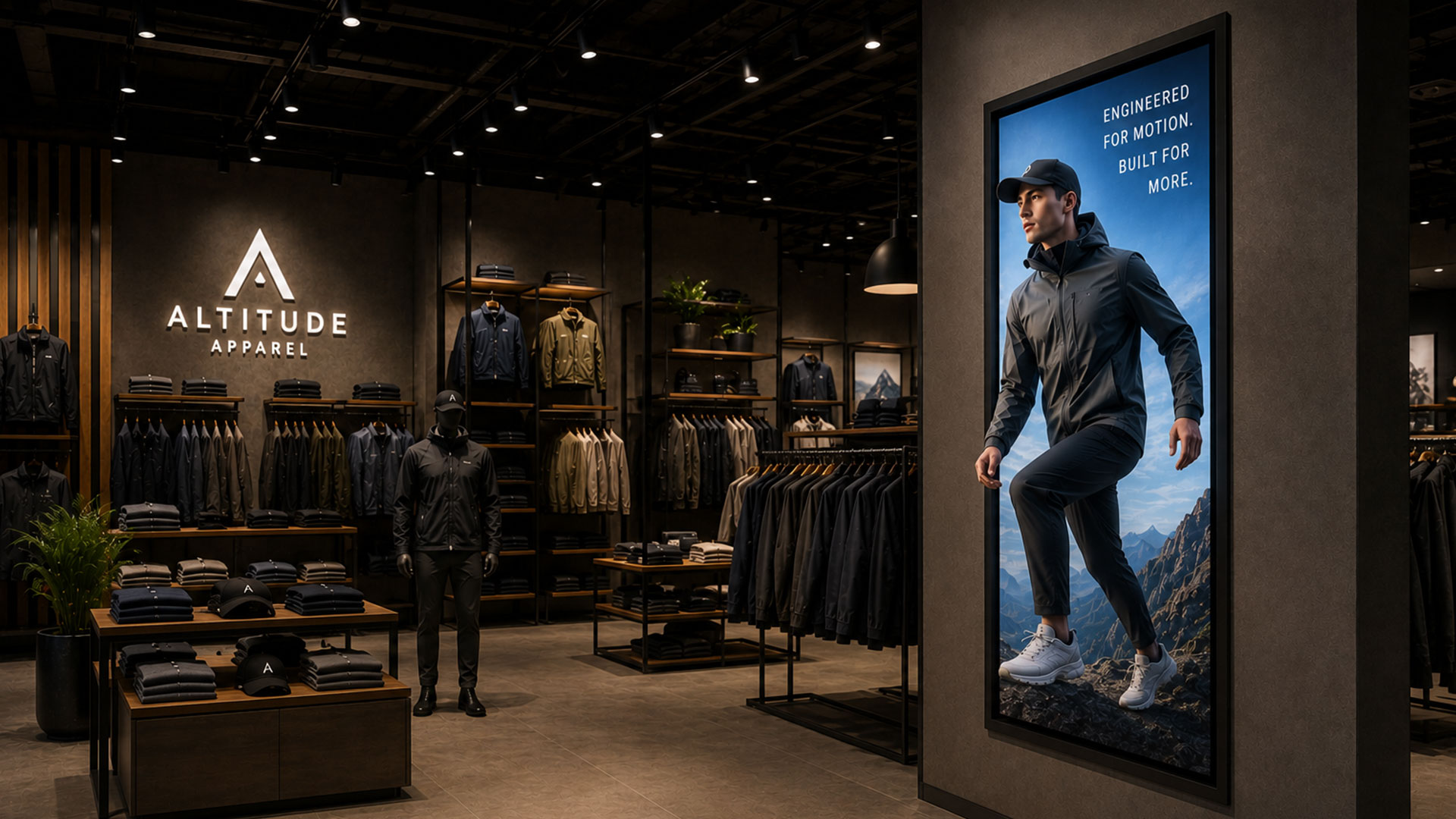
Visual merchandising can be a key differentiator for a retailer, drawing customers into the retail space, guiding them on their journey to product discovery, impacting purchase decisions, improving customer satisfaction and boosting overall sales.
The way a store is laid out is both an art form and a scientific exercise in psychology. Effective visual merchandising builds and enhances brand identity, captures customer attention, improves the customer shopping experience, and drive sales, and keep store environments welcoming and freshened so customers are incentivized to return and see something new.
Visual merchandising also goes beyond store shelves and creates immersive worlds (e.g., live stage shows, interactive workshops). It extends beyond traditional retail to experiential marketing. By combining storytelling, sensory stimulation, and psychology, retailers can crate spaces that sell products and elicit emotions simultaneously.
Creating High-Impact Experiences
Some visual merchandisers are already incorporating high-impact elements into store design, such as bold colors, music, and strategic lighting highlighting key products to create an atmosphere that aligns with lifestyles the products are meant to foster.
But professional merchandisers know how important it is to create an emotional connection with brands. They do this with themed displays that engage consumers with storytelling that connects with customers values. They employ interactive elements that involve shoppers both physically and emotionally.
Technology is now playing an outsized role in all areas of retail, and the store floor is no exception, transforming the overall field of visual merchandising in terms of how retailers conceive, execute, and measure the effectiveness of visual communication. Stores are employing interactive screens to provide more complete product information and to make greater inventory choices immediately available. Free-standing sampling kiosks and digitalized sampling carts, and even digitalized end caps. Augmented reality has shown up everywhere from fitting rooms that feature “magic mirrors” to help customers visualize their appearance in apparel, to home furnishing centers where everything from products to paint colors can be overlaid on room images.
3D Experiences – The Future of Retail
3D experiences are fast becoming a proven way to engage shoppers as virtual merchandisers use the technology to differentiate their retail brands. For example, Sephora provides a virtual try-on feature for makeup products. Nike implements VR experiences in their stores to showcase new products and engage customers. Audi uses VR in showrooms to allow customers to explore car models and features interactively. Footwear brand Merrell has a VR experience called “Trailscape,” that takes customers through a mountain environment to highlight their boots’ unique features, like grip, support, and durability.
Shopping as a Social Experience
However, in the years since people were forced to isolate at home due to COVID, shopping has become less a matter of buying things and more a matter of experience and connection. A few hours at the mall with friends constitutes more than retail therapy; it is time together that reinforces friendships.
Shopping with friends where excitement can be shared is a bonding experience. 60% of Gen Z shoppers say they visit malls to socialize or meet friends, and “create experiences.” These digital natives view malls as social hubs first and shopping destinations second and they create collaborative group shopping “wish lists” to guide their “retail adventures.”
Glasses-Free (and Headset-Free) Displays
Glasses-Free 3D technology has advanced incredibly over the years and has become a key display choice in theme parks for delivering high impact visual effects to millions of consumers each year. The tech is battle-hardened, and it makes sense that it evolved here with attractions first. The reasons are many and include a smaller footprint to create illusions as well as the reduced operational costs of managing experiences with 3D glasses or headsets. Creative agencies are leveraging this technology for trade shows, events, and experiential campaigns because of the tech’s show-stopping effects and immersive story-telling capabilities – with content popping out of the display by several feet it’s simply easier to capture your target audience on the go.
This makes glasses-free (and headset-free) 3D displays perfect for creating high-impact visual displays that both entertain and inform. Visual Merchandisers for example, can create head-turning immersive showcases of their products to optimize sales and easily manage all the 3D content across a chain. The output is highly compatible these days with Mpeg4 3D videos formatted to play across most content management systems or integrated with the latest retail media networks.
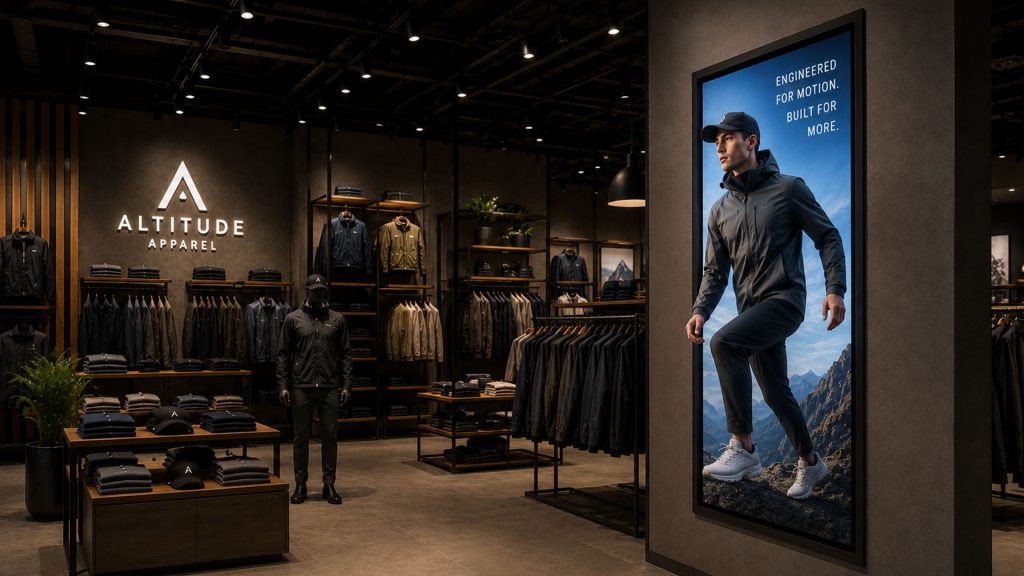
In a retail environment where experiences are shared, it only makes sense that this highly engaging technology should not be relegated to isolated experiences in headsets. Holographic glasses-free 3D technology is available in a variety of display sizes from hand-held tablets up to 100” in both portrait and landscape formats. This includes sizes that will work in-aisle, on endcaps, front-of-store, and in window displays. Encouragingly, research has shown that messages delivered in-store via holographic 3D screens increase shopper attention levels by 2,000% compared to 2D, which ensures greater message retention (up to +300% increase in unaided recall) and leads to higher sales conversion (180% for brands in the study).
Research also indicates that 62% of Gen Zs are attracted to brands they view as “cool or fun.” Per CivicScience, 90% of Gen Z adults (18-24) consume social media and are even heavier users of the medium than the 88% of Millennials (25-34) that use social media. This cohort is most likely to share exciting in-store experiences driven by holographic messaging on social media channels, providing brands and retailers with “social-proof” KPI’s and influencer metrics that have far wider exposure beyond the physical store.
Frankly, in-store may be one of the few opportunities for brands to communicate with hard-to-reach members of Gen Z since 65% of them have installed some form of ad-blocking technology, 66% skip online ads whenever they can and 36% will “do something else” while a digital ad is playing.
“Holographic” glasses-free 3D digital signage might seem futuristic, but the technology has evolved incredibly and delivers unparallel communication with visual display technology that resonates with consumer expectations of transformed retail experiences. For visual merchandisers whose aim is to differentiate their retail brand, this technology provides a whole new canvas on which to create high-impact visuals to help lead customers to product discovery, positively impact purchase decisions, improve customer satisfaction and boost overall sales.
About the Author
Tom Zerega is the Founder and CEO of Magnetic 3D, an innovative, glasses-free 3D technology Company based in New York City. Though an entrepreneur, angel investor, media personality, and inventor, Tom is currently most recognized in the public spotlight today as expert on glasses-free 3D technology and AI.
About Magnetic 3D
Magnetic 3D is the industry leader in glasses-free 3D technology, delivering the only unified platform for holographic and immersive B2B applications without the need for 3D glasses or VR headsets. The company’s proprietary, state-of-the-art display hardware, professional software solutions, and AI-driven workflows are designed to unleash an abundance of the world’s 3D content. With over 20 years of innovation in autostereoscopic technology, Magnetic 3D has built the most comprehensive product line of headset-free 3D visualization systems—spanning desktop displays with eye-tracking for single-viewer applications to large-format, multi-viewer solutions for digital signage and Pro AV, including 100” 3D monitors in both landscape and portrait formats, as well as massive 3D video walls for immersive installations.
Headquartered in New York City, Magnetic 3D serves a broad range of industries where visual impact and spatial awareness are game-changers, including advertising, retail, hospitality, education, healthcare, simulation and training, themed entertainment, corporate environments, aerospace, and defense. The company empowers both end-user customers and the developer ecosystem with next-generation spatial and immersive computing capabilities, enabling the deployment and visualization of holographic 3D content anywhere—without VR headsets or 3D glasses. The technology delivers dramatically higher engagement—up to 2,000% increase over traditional 2D media—featuring captivating off-screen “pop” and incredible depth perception—making it a powerful tool for both storytelling and performance-driven applications.
For more information on Magnetic 3D’s products and services go to https://magnetic3d.com/ or email info@magnetic3d.com